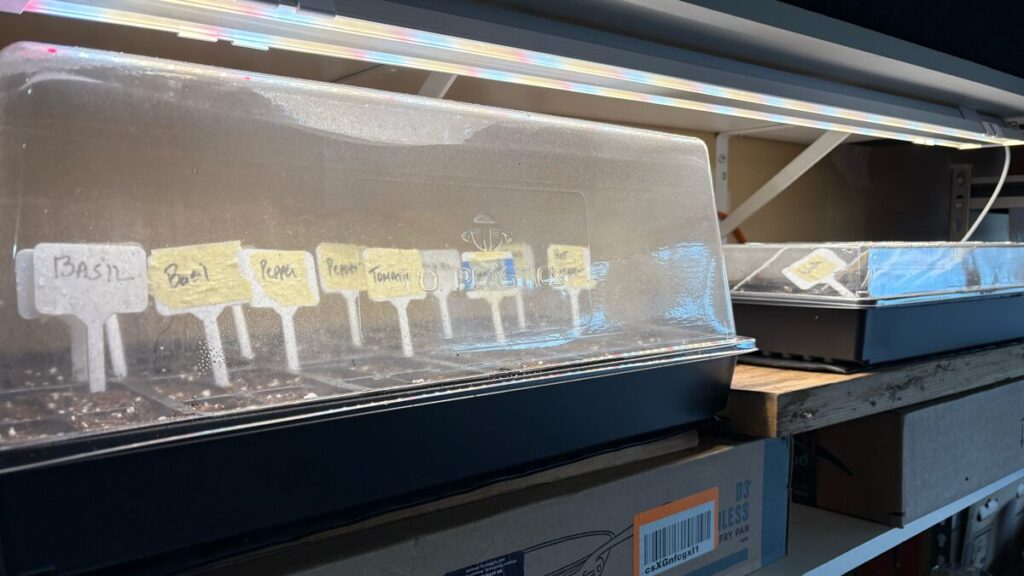
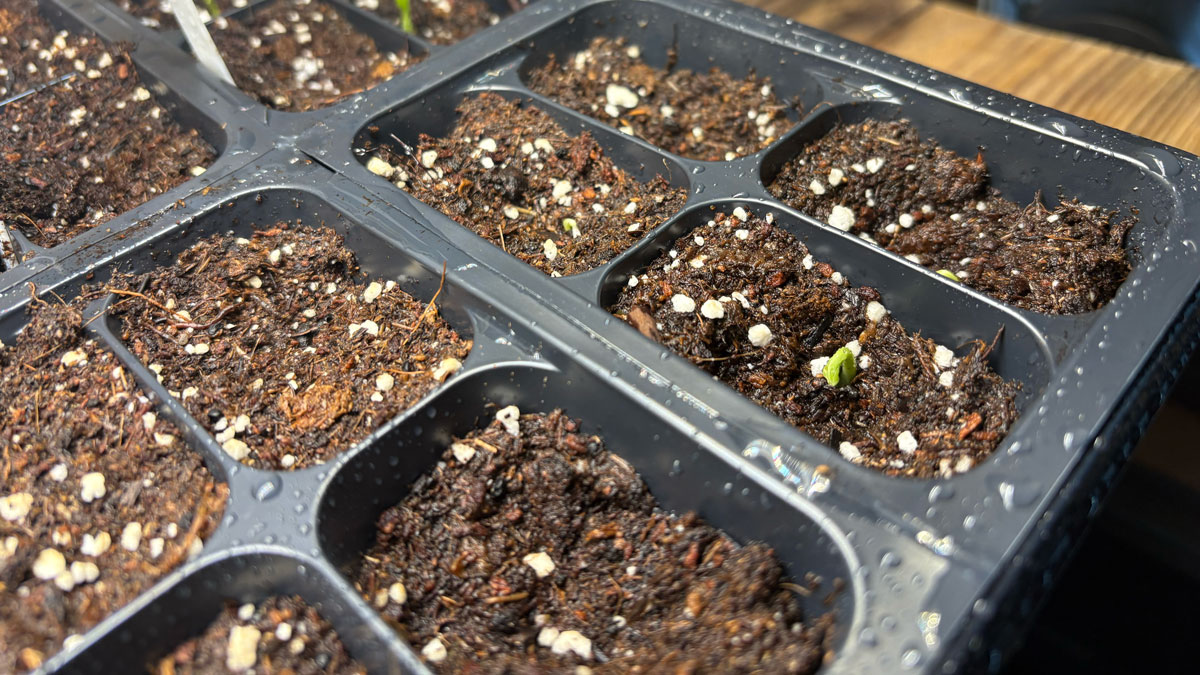
This year, I’m embarking a new gardening adventure . . . starting seeds indoors for the first time! Bozeman’s short growing season is only 100 days. Last year, it got cool at the end of August, and my tomatoes never matured. I got a lot of them, but they never turned red. This year I’m setting up a small indoor seed-starting station in my garage. The hope is this setup will help to grow strong, healthy seedlings ready for transplanting once the weather warms up. I hope to extend their season so they have a chance to mature before cold weather gets in again.
Garage Seed-Starting Setup
Since our last frost date is typically around June 1, I’m starting my seeds on April 1, about eight weeks ahead of time. To give them the best chance of survival, I’ve set up:
- Two seed trays that fit 48-cell inserts. They also have humidity domes to retain moisture and create a mini greenhouse effect. I bought these items at Cashman Nursery for an excellent price, way lower than the big box stores in town!
- Two heat mats to warm the soil to about 20°F above the ambient temperature, which should help with germination. I got the 2-pack on Amazon and it turns out this size is perfect for the seed trays.
- A 4-foot grow lights on a 12-hour timer to mimic natural daylight and keep my seedlings from getting too leggy. Honestly there is a lot of information about grow lights out there. I am not an expert and did not want to get stuck in analysis paralysis, so I bought this one since it was the right size, had a timer, and had decent reviews. I will see how it performs and report back!
With this setup, I’ll be starting tomatoes, cucumbers, peppers, fennel, Walla Walla onions, bunching onions, and beans. Each plant has different germination needs, so I’ll be keeping an eye on moisture levels and adjusting as necessary.
Why Use a Heat Mat and Grow Lights?
Since my garage is unheated and can get quite chilly in early spring, the heat mats will be crucial in keeping the soil warm enough for germination. Most vegetable seeds germinate best at temperatures between 65-85°F, so raising the soil temperature by about 20 degrees should help them sprout faster and more evenly.
The grow lights are also key. Without enough light, seedlings tend to get tall and weak as they stretch toward whatever natural light they can find. By keeping the lights on a 12-hour timer and positioning them just a few inches above the seedlings, I’m hoping to grow sturdy, compact plants that will transition well to the garden.
What’s Next?
Once the seeds sprout, I’ll need to keep a close eye on watering, making sure the soil stays moist but not soggy. As they grow, I’ll adjust the height of the lights and eventually start hardening them off before transplanting them outside.
This is my first time attempting indoor seed starting, so I’m fully prepared for a learning curve! Whether I end up with a lush tray of seedlings or just a handful of survivors, this experiment will help me fine-tune my approach for future seasons. I’ll be keeping track of what works (and what doesn’t) so I can improve my setup next year. Here’s to a successful start to the 2025 gardening season!